If you’ve spent more than an hour on a high-pop server, you already know that Rust is as much a psychological battlefield as it is a survival game. Walking onto a beach in default burlap doesn’t just make you vulnerable; it marks you as a “naked”, a low-tier target often dismissed or bullied by established groups. Stepping beyond the basic textures is the first essential step in reclaiming your identity and changing how the rest of the server perceives your threat level.
In the brutal social hierarchy of a wipe, your appearance dictates every interaction. A well-coordinated kit suggests experience and discipline, projecting the image of a seasoned veteran rather than a lucky scavenger. This visual “flex” can often be the difference between a neighbor offering a peace treaty or deciding your 2×1 is an easy target for a Saturday raid. Beyond the mental games, choosing to purchase RUST skins provides a tangible mechanical advantage that many players overlook. From “imposter” camos that offer biome-specific stealth in the thick brush to high-contrast iron sights that let you track targets in low-light skirmishes, the right gear is a functional tool for survival.
Furthermore, unlike many modern titles where purchases are locked to an account, the Rust economy functions like a living commodity exchange. Because most skins are only available for a one-week window before hitting the secondary market, they carry real-world liquidity and stable value. Your locker isn’t just a collection of cosmetics; it’s a digital portfolio that you can trade, sell, or upgrade as your playstyle evolves, making every purchase a strategic investment in your long-term gameplay experience.
The Strategic “Why”: How Skins Actually Improve Your Wipe
In a game where a split-second hesitation leads to a death screen, your gear needs to do more than just look pretty. When you buy RUST skins, you aren’t just customizing a character; you are optimizing your efficiency and survivability. Strategic skin choices provide a mechanical “buff” to your awareness and stealth that the default gray-and-brown textures simply cannot match.
Low-Light Mastery and Tactical Navigation
Nighttime in Rust is notoriously punishing, often forcing players to choose between fumbling in the dark or revealing their position with a flare or flashlight. This is where high-utility skins become essential. Certain “glow” skins, particularly on Large Wood Boxes and Sheet Metal Doors, act as permanent, low-profile navigation beacons. By placing a glowing Small Box near your airlock or using a door with luminous markings, you can navigate your compound in total darkness without ever hitting your light key. On the offensive side, “budget” weapon skins with high-contrast or luminous iron sights allow you to track targets against dark silhouettes, giving you a massive accuracy advantage during those critical dusk and dawn skirmishes.
The Stealth Meta: Breaking the Silhouette
The “pay-to-win” reputation of expensive sets like Whiteout or Forest Raiders exists for a reason: they work. However, savvy players can achieve nearly identical results using “imposter camo.” By hunting for affordable items with disrupted patterns and biome-accurate colors, like the weathered tans of the Fallen set for the desert or the fractured whites of the Comics hoodie for the Arctic, you can effectively vanish into the brush. These budget alternatives break up your human silhouette just as effectively as the $50 sets, allowing you to get the drop on players who are looking for the high-contrast movement of a default gray hoodie.
Base Organization and the “Depot” Grind
Efficiency inside your base is just as vital as combat prowess outside of it. During a hectic “depot” after a successful raid, every second spent hovering over a wooden box is a second you aren’t out securing more loot or defending your walls. Utilizing distinct, high-visibility skins for your storage allows for instant recognition. By assigning a specific visual identity to your “Guns,” “Components,” and “Resource” boxes, such as using the Industrial or Neon storage variants, you create a subconscious map of your loot room. This color-coding shaves precious time off your inventory management, ensuring that when the “raid sirens” go off, you know exactly where your defensive gear is stored without having to read a single label.
Where to Buy: Navigating the 2026 Market
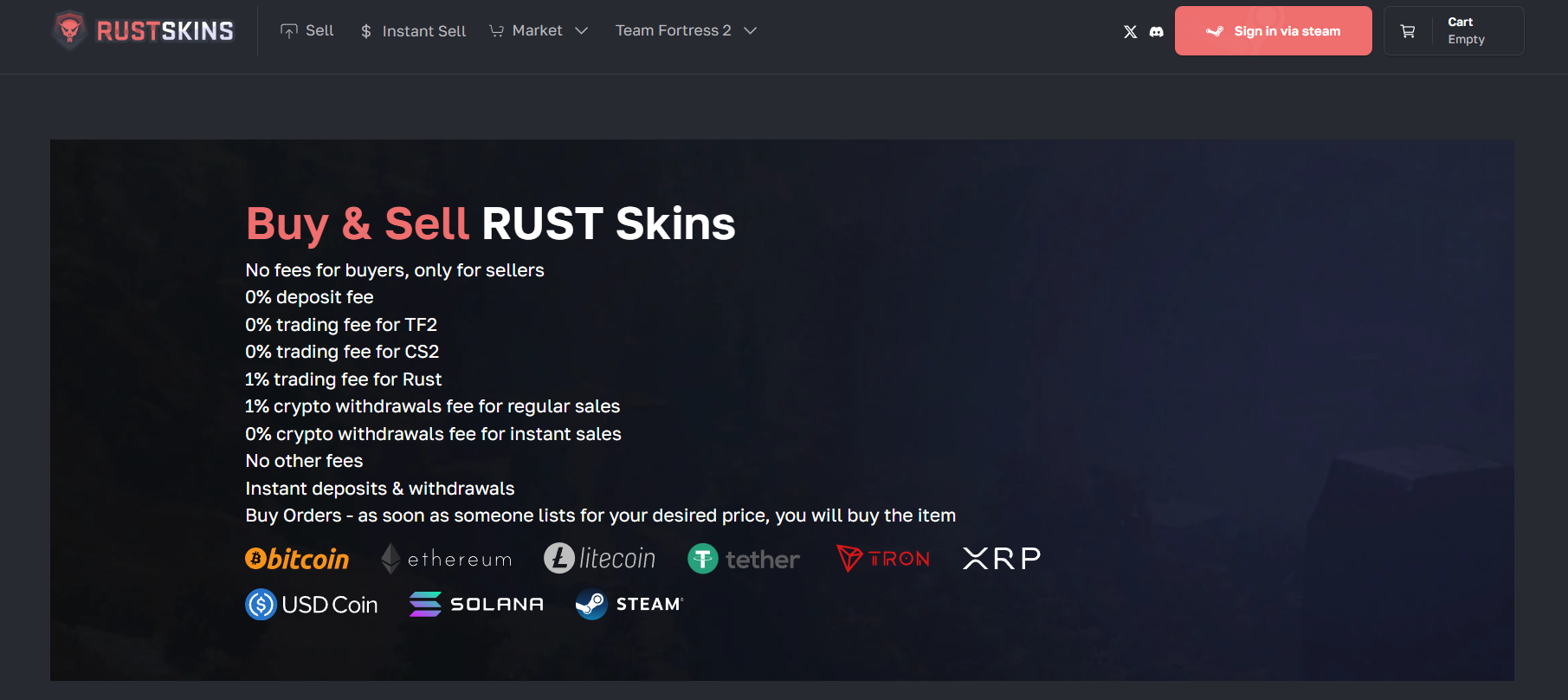
Finding the right gear is only half the battle; knowing where to buy RUST skins safely can save you a massive percentage of your Steam balance. In 2026, the market is divided between the convenience of the official store and the deep discounts found on third-party platforms.
The Official Item Store: The “Retail” Window
Every Thursday, Facepunch releases a fresh set of skins at a fixed price. This is your only chance to get items at “retail” before they hit the secondary market. If a skin looks like it might become a “meta” camouflage item or features a unique glow-in-the-dark sight, buying it here for the standard $1.99 – $3.99 is almost always the smartest move. Once these skins leave the store, their price is dictated entirely by player demand, and “essential” items often double or triple in value within weeks.
The Steam Community Market: Convenience and Security
The Steam Market remains the gold standard for security. Since every transaction happens entirely within Valve’s ecosystem, there is zero risk of a “bot” failing to deliver your item. It is the highest-liquidity option, meaning you can find almost any skin instantly. However, this convenience comes with a “Steam Tax”, a 15% fee that is baked into every price. While it’s the safest place for a quick purchase, you will almost always pay more here than anywhere else.
Third-Party Platforms: The Pro-Player’s Discount
If you are looking to stretch your budget, high-volume players move to external marketplaces. These sites facilitate trades between players and often offer discounts of 20% to 35% compared to Steam prices because they allow sellers to cash out to real-world currency.
- Skinport: Known for its high security and strict adherence to regulations. It uses a “consignment” system where bots hold the items, making the buying experience nearly as seamless as Steam.
- DMarket: A massive multi-game platform with high liquidity. Because it supports several major titles, it usually has the highest volume of Rust items available at any given time.
- SkinsMonkey: A top-rated choice for 2026 that focuses on instant bot trading and “trade-ins.” This is the best place to swap a pile of low-value “junk” skins for one of the clean, tactical sets you actually want.
Step-by-Step: Your First Purchase
Acquiring your first set of skins can feel overwhelming given the thousands of options, but the process is straightforward once you understand how to navigate the marketplace. You don’t need a massive investment to see a complete overhaul in your character’s appearance and in-game utility.
Setting Your Budget: The $10 “Full Kit”
In Rust, a “full kit” generally consists of a hoodie, pants, a primary weapon skin (like an AK or SAR), and a high-utility deployable like a Sheet Metal Door or Large Wood Box. In the 2026 market, you can easily secure all five of these items for under $10.
The Buy Order Hack: Snagging 10% Discounts
Most players simply click the “Buy” button on the Steam Community Market, but the savviest collectors use Buy Orders. Instead of paying the current lowest listing, you can specify exactly how much you are willing to pay for an item.
Navigate to the skin’s market page and click “Buy.” Select the “Place a Buy Order” option and enter a price slightly above the current highest buy order but 10–15% below the current selling price.
Since Rust is a high-volume game, items are constantly being “quick-sold” by players who just want instant Steam credit. Your buy order will automatically snag these discounted items while you’re offline.
Inventory Integration: Equipping Your New Gear
Once a skin is in your Steam inventory, there are two ways to bring it into the game.
- The Crafting Menu: When you go to craft an item (like a Hoodie), a small skin-selection window will appear beneath the item’s icon. Simply select your new skin before hitting “Craft,” and the item will be created with the custom texture already applied.
- The Repair Bench: If you found an item in a crate or killed a player for their gear, you can still apply your skins. Place the item into a Repair Bench (which costs 125 Metal Fragments to craft). You will see a “Change Skin” button that allows you to swap to any skin you own for that specific item. This process is free and does not consume any resources, allowing you to re-skin your entire loadout mid-wipe.
Building a “Visual Identity” on a Budget
Creating a “look” in Rust usually implies spending hundreds of dollars on matching sets like Whiteout or Glory. However, the most stylish players in 2026 aren’t the ones who simply buy the most expensive kit; they are the ones who understand visual composition. By following a few design principles, you can build a signature identity that commands respect on any server without draining your Steam wallet.
The 70/30 Rule: Strategic Spending
The secret to an expensive-looking kit is the 70/30 Rule. Allocate 70% of your budget to a single “Hero Item”, typically a high-fidelity weapon skin like the Training AR or a highly detailed chest piece, and fill the remaining 30% with neutral, dirt-cheap fillers. Because the human eye (and your own first-person view) naturally gravitates toward the most intricate textures, a high-quality “Hero” item draws attention away from basic $0.50 pants or burlap wraps. This creates the illusion of a premium loadout while keeping your actual investment minimal.
If you’re starting from scratch, a Duel referral code can quietly tip the balance in your favor, making it a bit easier to lock in that standout piece early and build the rest of your kit around it.
Color Synergy: The “Fake Set” Hack
You don’t need to buy a named collection to achieve a professional, unified aesthetic. The trick is hunting for shared color palettes. Many budget skins from different creators inadvertently use the same shades of olive drab, weathered tan, or industrial gray.
- The Anchor Color: Pick a base neutral, like matte black or desert tan, and find three or four $0.50 items that share that exact hex code.
- The Result: A $2.00 custom-built “set” often looks more unique and cohesive than a $40 set that everyone else is wearing. When the color grading matches perfectly across your hoodie, pants, and weapon, you project an image of a seasoned player who knows exactly how to buy RUST skins with intent.
Tactical Theme Ideas
If you aren’t sure where to start, these three budget-friendly themes offer high visual impact for a low entry price:
- The Industrial Specialist: Focus on slate grays, weathered steels, and caution-tape yellows. Pairing the Industrial Door with Bio Integrity Gloves and a gray hoodie creates a gritty, “monument-dweller” look that feels perfectly at home in Launch Site or Military Tunnels.
- The Arctic Ghost: Avoid the inflated prices of the Whiteout set by mixing Comics patterns with Snow Camo pants. This high-contrast white and blue theme breaks up your silhouette in the snow just as effectively as the “pro” sets but for about 90% less cost.
- The Wasteland Raider: This is the ultimate “scrapper” aesthetic. Use skins with rust streaks, exposed wiring, and “junk” textures like the Chemical Burn series. It embraces the post-apocalyptic chaos of Rust, making you look like a survivor who has lived through a dozen successful raids.
The “Investment” Mindset: Skins as Liquid Assets
One of the most unique aspects of the Rust experience is that your locker isn’t a “money pit.” Because the game’s economy is integrated with the Steam Community Market, your cosmetics function as liquid assets. When you decide to buy RUST skins, you are essentially moving funds into a digital commodity that can be traded back for Steam credit or other items later. Understanding the market’s rhythm allows you to play for “free” by rotating your inventory strategically.
Skin Cycles: Why Deployables Outperform Clothing
In the Rust marketplace, not all items are created equal. While a cool hoodie is great for personal style, clothing skins typically have a high supply and a slower appreciation rate. If you are looking for stability, focus on high-utility deployables like Large Wood Boxes, Garage Doors, and Sheet Metal Doors.
These items are considered “essential” for every base, ensuring there is always a baseline of demand. Furthermore, deployables often feature unique functional benefits, like glowing textures that help with night-time base navigation, which keeps their value much more resilient than purely aesthetic clothing. A glow-in-the-dark box skin bought for $2.00 today is far more likely to retain its value (or even climb) compared to a generic camouflage shirt.
Timing the Market: The “Post-Wipe Dip” and “Update Hype”
The Rust market breathes in sync with the game’s update schedule and player activity. To get the best prices, you need to recognize two major phases:
- The Post-Wipe Dip: Prices often fluctuate based on the weekly server wipes. Immediately following a “forced wipe” on the first Thursday of the month, the market sees a massive influx of activity. However, the best buying window is often the “mid-wipe lull”, roughly 10 to 14 days after a major skin release, when the initial hype has died down and “quick-sellers” are lowering their prices to fund their next purchase.
- The Update Hype: Facepunch is incredibly consistent with monthly content updates. If a “Naval Update” or an “Arctic Update” is announced, skins related to those biomes (like boats or white camo) will see an immediate price spike. The “investment” mindset means buying these items during the “off-season”, buying your snow gear in the summer and your desert camo during the winter events, to avoid paying the “hype tax.”
Conclusion: Form Meets Function
Ultimately, the decision to buy RUST skins is about more than just personal flair; it is a strategic layer of your survival kit. In a game as unforgiving as Rust, every minor advantage counts. Whether it is a glowing iron sight that helps you land a critical shot at dusk or a “budget camo” set that lets you slip past a rival zerg in the forest, the right aesthetic choice provides a tangible tactical edge. By moving away from the “default” look, you cease to be just another “naked” on the beach and start building a visual reputation that carries weight across every server you join.
Stepping into the marketplace doesn’t require a massive bankroll, only a bit of market savvy. By utilizing buy orders, seeking out high-utility deployables, and prioritizing color synergy over expensive brand names, you can cultivate a professional identity that is uniquely yours. Your locker is a digital portfolio that evolves with your playstyle, an investment in your enjoyment and efficiency that stays with you long after the map wipes and the stone walls crumble.